BLOG: October Birthstones: Opal and Tourmaline

October Birthstones: Opal and Tourmaline

One of October's two birthstones changes color while you look at it. The other comes in every color there is.

They are opposites in almost every way that matters. Opal is soft, unpredictable, and does something no other gemstone does. Tourmaline is hard, dependable, and available in a range so wide that for centuries people kept mistaking it for other stones entirely.

Opal held the month alone for a very long time. Tourmaline was added later, once the trade worked out what it had been looking at. So if you were born in October you weren't handed a birthstone so much as a choice between two temperaments.

Here's what separates them, including the reason opal spent a hundred years with a reputation it never earned.


Why does opal change color?

Opal has no color of its own. It manufactures one.

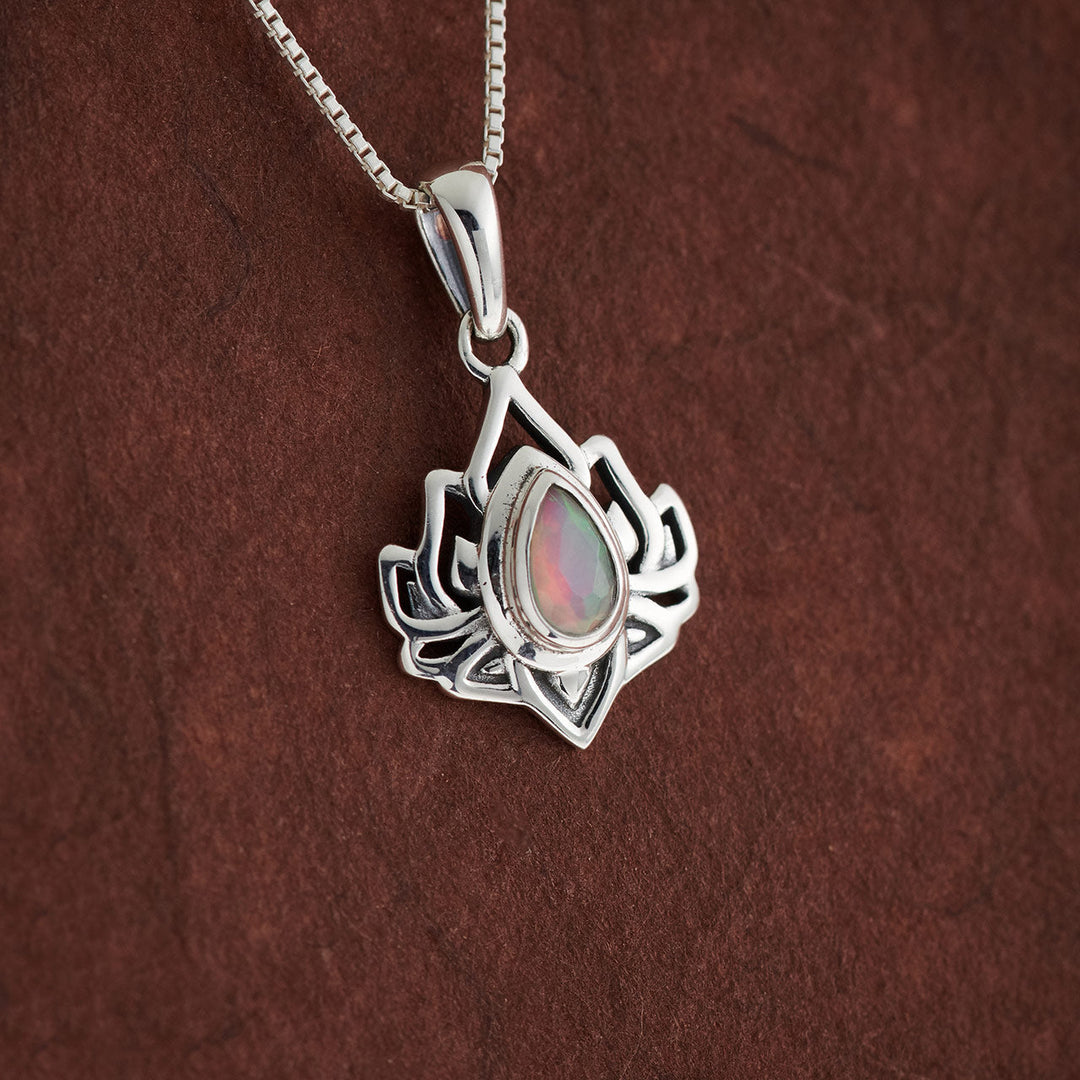
Inside the stone are microscopic spheres of silica stacked in a regular grid. Light enters, strikes that grid and diffracts, splitting the way it splits through a prism. What comes back out is play-of-color: flashes of green, orange, blue and red that shift as you move.

This is why opal photographs badly and wears beautifully. A still image captures one frame of something that only exists in motion.

Opal also comes in more base colors than most people expect. White and milky are the familiar ones, but it also occurs in yellow, orange, brownish red, chocolate brown and black. Black opal, with play-of-color burning against a dark body, is the most prized of them.

Are opals bad luck?

No, and the superstition has a traceable origin that is almost funny.

In 1829 Walter Scott published a novel called Anne of Geierstein. A character in it wears an opal that brightens and dims with her moods. Holy water touches the stone, the fire goes out of it, and she dies soon after.

It was fiction. Readers treated it as folklore. Opal sales across Europe fell sharply in the following years, and the reputation stuck for the better part of a century.

Everything before Scott points the other direction. Ancient Greeks believed opal granted prophecy and protection from disease. Bedouin tradition held that opals contained lightning that had fallen from the sky during storms. Across medieval Europe the stone was associated with purity, hope and truth.

One novelist undid all of that. Worth knowing if anyone tells you your birthstone is cursed.

What is tourmaline, and why does it come in so many colors?

Tourmaline has the widest color range of any gemstone. Pink, red, green, blue, violet, yellow, black, colorless, and combinations of several inside a single crystal.

The name comes from a Sinhalese word meaning "stone with mixed colors," and it started as a trader's term rather than a scientific one. Parcels of stones in Sri Lanka that couldn't be sorted by color got labelled tourmaline, because tourmaline kept turning up in all of them. For centuries individual tourmalines were sold as rubies and emeralds by mistake.

The named varieties are worth knowing. Rubellite is the red to pink. Chrome tourmaline is a deep emerald green. Paraíba is the electric blue-to-violet that made the stone famous, and it commands prices to match. Watermelon tourmaline is a pink core wrapped in a green rim, usually cut in cross-section slices so you see both at once.

A New England stone

Tourmaline's main commercial source today is Brazil, with significant material from Afghanistan, Pakistan, Kenya, Madagascar and Mozambique.

It also comes out of Maine.

New England tourmaline has a long history, and for a stretch of the nineteenth century the region was one of the more important sources in the world. It remains one of the few genuinely notable gemstones with roots in this part of the country.

Opal or tourmaline: which should you actually wear?

This comes down to hardness, and the gap between them is significant.

Tourmaline sits at 7 to 7.5 on the Mohs scale and is rated for everyday wear. If you want an October stone in a ring you'll put on every morning and never think about, this is the one.

Opal sits at 5 to 6.5, which is considerably softer. That doesn't make it fragile, but it does make it a stone for pieces you wear with some awareness. Pendants and earrings take far less abuse than rings do.

Choose tourmaline for durability and a color you can specify. Choose opal for the one thing tourmaline can't do, which is change while you're looking at it.

How do you clean opal and tourmaline?

Opal: warm water and mild soap with a soft cloth. Avoid ultrasonic and steam cleaners entirely, and don't leave it soaking. If your opal is a doublet or triplet, meaning a thin opal layer bonded to a backing, prolonged water can weaken the adhesive.

Tourmaline: warm soapy water and a soft brush. Keep it away from high heat, and skip ultrasonic cleaners here too.

Neither is difficult. Both simply prefer that you not put them through a machine.

One more reason to buy either

Opal marks the fourteenth wedding anniversary. Tourmaline marks the eighth. So both stones carry a second occasion beyond October birthdays, which is worth remembering if you're shopping for someone whose birthday is nowhere near autumn.

Shop the October collection →